Keynote Speakers
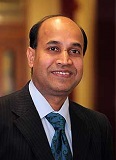
Prof. Dr. Subhas Chandra Mukhopadhyay
IEEE Fellow
School of Engineering, Macquarie University, Australia
Speech Title: IoT, Smart Home and Smart City: From Sensors to computing
Abstract
The advancements in electronics, embedded controllers, smart communicating devices as well as the progress towards a better informed, knowledge based society increase the demand for small size, affordable sensors that allow accurate and reliable data recording, processing, storing and communication. This led to the paradigm known as Internet of Things (IoT) in which Wireless Sensor Nodes are most important elements.
The seminar will present research activities on development of IoT and WSN based system towards managing our health and home in a better way. A holistic view of IoT, its challenges and opportunities will be presented. Recent work on sensors for Smart city and water applications will be shared.
Biography
Subhas holds a B.E.E. (gold medallist), M.E.E., Ph.D. (India) and Doctor of Engineering (Japan). He has over 30+ years of teaching, industrial and research experience. Currently he is working as a Professor of Mechanical/Electronics Engineering, Macquarie University, Australia and is Discipline Leader of the Mechatronics Engineering Degree Programme. He is Director of International Engagement of School of Engineering. His fields of interest include Smart Sensors and sensing technology, instrumentation techniques, wireless sensors and network, IoT etc. He has supervised over 55 postgraduate students and over 150 Honours students. He has examined over 60 postgraduate theses.
He has published over 500 papers in different international journals and conference proceedings, written ten books and fifty two book chapters and edited eighteen conference proceedings. He has also edited thirty five books with Springer-Verlag and thirty journal special issues. He has organized over 20 international conferences as either General Chairs/co-chairs or Technical Programme Chair. He has delivered 410 presentations including keynote, invited, tutorial and special lectures.
He is a Fellow of IEEE (USA), a Fellow of IET (UK), a Fellow of IETE (India), a Topical Editor of IEEE Sensors journal, and an associate editor of IEEE Transactions on Instrumentation and Measurements, IEEE Review of Biomedical Engineering, IoP Measurement Science and Technology. He is a Distinguished Lecturer of the IEEE Sensors Council from 2017 to 2022. He is the Founding chair of IEEE IMS NSW chapter and IEEE NSW Sensors Council Chapter.

Prof. Alejandro F Frangi
IEEE Fellow, SPIE Fellow
University of Leeds, UK
Speech Title: Computational Precision Medicine for Precision Medicine & Medical Devices
Abstract
Traditional medical product development life-cycle begins with pre-clinical development. In laboratories, bench/in-vitro experiments establish plausibility for treatment efficacy. Then in-vivo animal models with different species guide medical device efficacy/safety for humans. With success in both in-vitro/in-vivo studies, a scientist can propose clinical trials testing whether the product is made available for humans. Clinical trials often involve testing across many people, which is costly, lengthy, and sometimes implausible (e.g. paediatric patients, rare diseases, underrepresented ethnic groups). When medical devices fail at later stages, financial losses can be catastrophic (high-risk pre-market approval (PMA) device costs can average £74m, of which £54m are spent in FDA-linked regulatory stages over an average of 4.5 years). Many reports have pointed to this broken/slow innovation system and its impact on societal costs and suboptimal healthcare. However, radical changes to this innovation process are still to be developed.
This talk introduces how computational imaging and computational modelling can deliver a paradigm shift in medical device innovation where quantitative sciences are exploited to engineer device designs carefully, explicitly optimise the clinical outcome, and thoroughly test side effects before being marketed. In-silico clinical trials are essentially computer-based medical device trials performed on populations of virtual patients. They use computer models/simulations to conceive, develop and assess devices with the intended clinical outcome explicitly optimised from the outset (a-priori) instead of tested on humans (a-posteriori). This will include testing for potential risks to patients (side effects) and exhaustively exploring in-silico for medical device failure modes and operational uncertainties before being tested in live clinical trials. We will explore this topic and give examples and signpost areas of further research where the medical image computing community can make a considerable contribution in combination with other convergent technologies.
Biography
Alejandro (Alex) obtained his BSc/MSc in Telecommunications Engineering from the Universitat Politecnica de Catalunya (Barcelona, 1996) with an MSc thesis on electrical impedance tomography for image reconstruction and noise characterisation at UPC. He obtained a grant from the Dutch Ministry of Economic Affairs to pursue his PhD (2001) in Medicine at the Image Sciences Institute of the University Medical Centre Utrecht on model-based cardiovascular image analysis. He was visiting researcher at the Imperial College in London, UK, and in Philips Medical Systems BV, The Netherlands. Prof Frangi is Diamond Jubilee Chair in Computational Medicine at the University of Leeds, UK, with joint appointments at the School of Computing and the School of Medicine. He is also Royal Academy of Engineering Chair in Emerging Technologies, focusing on Precision Computational Medicine for In Silico Trials of Medical Devices. He is the Scientific Director of the Leeds Centre for HealthTech Innovation, a joint initiative from the University of Leeds and the Leeds Teaching Hospitals NHS Trust. He is also the Director of Research and Innovation at the Leeds Institute for Data Analytics. He founded and directed the Centre for Computational Imaging and Simulation Technologies in Biomedicine (www.cistib.org). Prof Frangi is an Honorary Professor at the Departments of Electrical Engineering and Cardiovascular Sciences at KU Leuven. Prof Frangi has main research interests lay at the crossroad of medical image analysis and modelling, emphasising machine learning (phenomenological models) and computational physiology (mechanistic models). He is interested in statistical methods applied to population imaging and in silico clinical trials. His highly interdisciplinary work has been translated to the areas of cardiology, neurology, and bone diseases. Among other accolades, he is an IEEE Fellow (2014), SPIE Fellow (2020), MICCAI Fellow (2021) and a recipient of the IEEE Engineering in Medicine and Biology Early Career Award (2006) and the IEEE EMBS Technical Achievement Award (2021). Under his leadership, CISTIB develops GIMIAS (Graphical Interface for Medical Image Analysis and Simulation, www.gimias.org), an open-source platform for rapidly developing pre-commercial software prototypes in the areas of image computing and image-based computational physiology modelling, and MULTI-X (Health Data Analytics and Modelling As a Service Platform, www.multi-x.org), a cloud-based platform for computational phenomics, in silico medicine, and in silico clinical trials. His research and development group led to GalgoMedical SA's spin-off (2013, www.galgomedical.com).
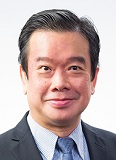
Prof. SIAU Keng Leng
Head of the Department of Information Systems and Chair Professor of Information Systems
City University of Hong Kong, China
Biography
Professor Siau is the Head of the Department of Information Systems and Chair Professor of Information Systems at the City University of Hong Kong (June 2021-present). Professor Siau received his Ph.D. in Business Administration from the University of British Columbia (Canada) in 1996. His M.S. and B.S. (honors) degrees are in Computer and Information Sciences from the National University of Singapore. Professor Siau has more than 300 academic publications. His research publications have appeared in journals such as MIS Quarterly, Journal of the Association for Information Systems, Journal of Strategic Information Systems, Decision Support Systems, Information Systems Journal, Data and Knowledge Engineering, IEEE Transactions on Information Systems in Biomedicine, IEEE Transactions on Systems, Man, and Cybernetics, IEEE Transactions on Professional Communication, IEEE Transactions on Education, Communications of the ACM, Communications of the AIS, and others. According to Google Scholar, he has a citation count of more than 18,000. His h-index and i10-index, according to Google Scholar, are 71 and 172, respectively. Professor Siau is consistently ranked as one of the top information systems researchers globally based on his h-index and productivity rate. In 2006, he was ranked as one of the top ten e-commerce researchers globally (Arithmetic Rank of 7, Geometric Rank of 3). In 2006, the citation count for his paper "Building Customer Trust in Mobile Commerce" was ranked in the top 1% in the field as reported by Essential Science Indicators. He is also on the 2020 and 2021 Stanford University lists of the top 2% most-cited scientists in the world (ranked in the top 1%) and ranked as one of the top computer scientists in the U.S. and the world (https://www.guide2research.com/u/keng-siau). He has been involved in projects totaling more than U.S. $6 million, and his research has been funded by NSF, IBM, and other business organizations.
Professor Siau has received numerous teaching, research, service, and leadership awards. He received the University of Nebraska-Lincoln Distinguished Teaching Award and the College of Business Administration Distinguished Teaching Award in 2001. He was awarded the Organizational Leadership Award in 2000 and the Outstanding Leader Award in 2004 by the Information Resources Management Association. He received the University of Nebraska-Lincoln College of Business Administration Research Award in 2005, and the Faculty External Recognition Award and Outstanding Contributions to Graduate Studies Award from the Missouri University of Science and Technology in 2020. He was a recipient of the prestigious International Federation for Information Processing (IFIP) Outstanding Service Award in 2006, IBM Faculty Awards in 2006 and 2008, IBM Faculty Innovation Award in 2010, AIS Sandra Slaughter Service Award in 2019, and AIS Award for Outstanding Contribution to IS Education in 2019.
Research Interests: Digital Transformation and Digital Society, Business Analytics and Data Science, Technological Innovation and Entrepreneurship, Smart Health and FinTech AI, Robotics, and Machine Learning: Future of Work and Future of Humanity, Human-Centered AI, Human-AI Interaction, Metaverse.
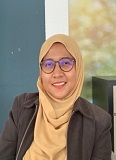
Prof. Rozaida Ghazali
Faculty of Computer Science & Information Technology
Universiti Tun Hussein Onn Malaysia, Malaysia
Speech Title:ADVANCED NEURAL NETWORK MODELS FOR TIME SERIES PREDICTION & CLASSIFICATIONS TASKS
Abstract
Time series forecasting and data classification get much attention due to their impact on many practical applications. The task is about gaining insights from data, using different tools, statistical models, and machine learning algorithms, with the goal of discovering hidden patterns from the raw data. However, extracting useful information has proven extremely challenging. Conventional mathematical and analytical methods still face difficulty in deciphering complex data systems. To tackle this, Neural networks (NN), which support a wide range of business intelligence applications, have opened up exciting opportunities for discovering patterns in various data types. They have been attracting widespread interest to be a promising tool for forecasting the times series signals and classifying data based on their respective groups. With the deployment of NN to scour extensive databases, diverse unique and meaningful patterns can be found, which otherwise remain unknown. They can handle imprecision, uncertainty, partial truth, and approximation to achieve tractability, robustness and low solution cost. Hence, this keynote presentation will discuss how NN, individually or in an integrated manner, are becoming strong candidates for performing tasks related to time series forecasting and data classification.
Biography
Rozaida Ghazali is currently a Professor at the Faculty of Computer Science and Information Technology, Universiti Tun Hussein Onn Malaysia (UTHM). She graduated with a PhD degree in Higher Order Neural Networks from the School of Computing and Mathematical Sciences at Liverpool John Moores University, United Kingdom in 2007. Earlier, in 2003 she completed her M.Sc. degree in Computer Science from Universiti Teknologi Malaysia (UTM). She received her B.Sc. (Hons) degree in Computer Science from Universiti Sains Malaysia (USM) in 1997. In 2001, Rozaida joined the academic staff in UTHM. Her research area includes neural networks, swarm intelligence, optimization, data mining, and time series prediction. She has supervised PhD and master students to successful completion and has published more than 150 refereed papers in top venues. She acts as a reviewer for various journals and conferences. She has also served as an editor for Springer book series, a conference chair, steering committee, and technical committee for numerous international conferences. She has led more than 15 research projects as a Principal Investigator under UTHM, Ministry of Education, and Ministry of Science, Technology & Innovation, Malaysia.